Il termine "antipasto" è di origine romana: "ante-paestum" significa "prima del pranzo" e si riferiva a una serie di cibi leggeri e semplicemente preparati che venivano serviti a tavola per iniziare il pasto.
È probabilmente il piatto più delizioso e anche il più divertente da preparare perché si presta alla creatività del cuoco.
Antipasto, letteralmente “prima del pasto”, è la prima portata di ogni pasto formale italiano in tutto il paese.
Le ingredienti stessi differiscono tra le regioni, in base alla tradizione e alla disponibilità, ma in genere includono varietà locali di salumi e formaggi, prodotti marinati, farciti o freschi come olive, peperoni, carciofi, oppure frutti di mare come le acciughe.
La combinazione dovrebbe comprendere molti aspetti del gusto (dolce, saporito, salato ecc.), oltre a essere ricca di contrasti di consistenza.
Il piatto è pensato per stuzzicare l’appetito e mettere in mostra le specialità locali, senza essere così sostanzioso da rovinare il resto delle portate (si spera!).
Origini antiche e sviluppo storico
Come già accennato, l’antipasto ha avuto origine nell’Antica Roma.
I Romani amavano consumare prima del pranzo verdure crude accompagnate da una varietà di salse, oppure frutta candita, soprattutto fichi.
Molti scritti latini giunti fino a noi ricordano anche che erano consapevoli del fatto che iniziare il pasto con verdure e insalate aiutava lo stomaco a ricevere le altre portate, che erano spesso piuttosto ricche e elaborate, soprattutto nelle case nobili.
Dopo l’antipasto, si passava infatti alla prima portata, con cinghiali arrosto allo spiedo, lepri decorate, pappagalli ripieni con uova di pavone, pesce al forno, gamberi e frutti di mare.
La seconda portata concludeva il banchetto con dolci e vari frutti.
Dopo la caduta dell’Impero Romano e per tutto il Medioevo, sembra che l’antipasto sia caduto in disuso, lasciando alla selvaggina il compito di aprire direttamente i pasti.
In Italia, nelle aree dove è forte l’azione levigante del mare e la filiera produttiva si basa sulla pesca, il compito di precedere i pasti è stato solitamente affidato a gamberi, crostini con ricci di mare o contorni a base di paté di tonno, olive, prezzemolo e limone.
Nelle regioni dove il clima è secco, il vento soffia da nord e gli inverni sono rigidi, gli antipasti diventano piatti sostanziosi a base di formaggi, salumi e insaccati, oppure torte salate.
È sulle tavole delle classi ricche e borghesi dell’Italia preunitaria (e anche in Francia) che l’arte dell’antipasto si sviluppò maggiormente, con i cuochi di corte che presentavano le loro creazioni, per lo più basate su piatti caldi e snack.
Certo, l’antipasto non era per tutti, ma anche tra i più poveri si creava qualcosa.
Le classi meno abbienti mangiavano perlopiù piatti unici e si basavano sulla filosofia del “mangiamo ciò che abbiamo” e “non sprechiamo gli avanzi”.
Ma è proprio nel nord Italia che ha avuto origine la tradizione di portare i salumi prima del pasto.
In effetti, una volta era una vera e propria seconda colazione o, se si preferisce, un pasto prima di pranzo.
I contadini si riunivano con le loro famiglie e il proprietario terriero nei giorni di festa e, soprattutto in inverno, erano abituati a mangiare salumi della pianura e formaggi fatti in casa accompagnati da un bel bicchiere di vino rosso.
Il custom likely originated in medieval Italy, when spiced nuts and sliced ham were served at the beginning of a meal, with the aim to excite, but not fill, diners.
The custom fell out of favour in the Middle Ages, to be revived during the Renaissance when some of Italy’s early ‘celebrity’ chefs, figures such as Bartolomeo Scappi, were elaborating on medieval taste preferences and incorporating modern techniques and ingredients newly-introduced to Europe into contemporary cooking.
This era saw the revival of serving platters of what today we might call ‘finger foods’ on a credenza, a sideboard separate from the dining table.
This course subsequently evolved into the hors d'oeuvre.
Today the antipasto course remains fundamental to Italian dining, in large part due to beliefs concerning digestion and the importance of prepping the stomach for foods, and temperatures, to come.
(Interestingly, the still-observed habit of serving a small salad at the start of a meal derives from this notion.)
Ingredienti e struttura del piatto
Gli antipasti veri sono caratterizzati da un’abbondanza di sale (come nei formaggi, nei sottaceti, nelle olive in salamoia), da agenti aciduli come aceto o succhi di agrumi (sottaceti ancora, verdure marinate) e da pesce e carne affumicati e salumi.
Gli elementi di sale, acidità e fumo sono conservanti.
Essi stimolano anche in modo significativo il palato.
Le verdure restano una base essenziale nel tempo: oggi, se non sono usate direttamente all’interno dei piatti, vengono impiegate sotto forma di numerose creme che accompagnano soprattutto salumi e insaccati.
Non mancano le mostarde, usate sia per accompagnare i formaggi negli antipasti sia in secondi piatti come i bolliti.
Un’ottima soluzione adottata da molte famiglie è conservare le verdure sott’olio, così da tenerle da parte per riutilizzarle durante gli antipasti.
In Italia, le antìpasti plates invariably feature different preparations of vegetables: crudo (fresh vegetables sliced like crudités), sott’olio (grilled or roasted vegetables packed in olive oil), or sott’aceto (vegetables pickled in vinegar and spices).
In addition to vegetables, a traditional antipasto platter will include an assortment of salumi, cold cuts such as prosciutto crudo, culatello, and salame, together with olives, crostini or fried polenta squares topped with sauces or pâtés, and devilled eggs.
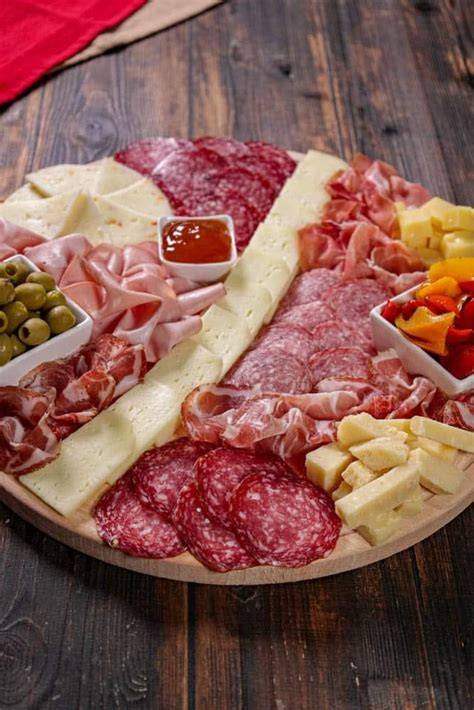
Antipasto typically consists of a variety of small, bite-sized portions presented on a large platter from which guests serve themselves.
The components of an antipasto platter can vary widely, but common ingredients include cured meats, cheeses, vegetables, seafood and bread.
The presentation of antipasto is often visually appealing, with ingredients arranged in an aesthetically pleasing manner on the platter.
This not only enhances the dining experience but also showcases the variety and quality of the ingredients.
Antipasto can vary from an abundant and colourful display brimming with Italian delicacies to a simple plate of a few topped crostini and cured meats.
Varianti regionali italiane
As noted in cuisine 37 (Southern Italy), while the South of the country is characterised by liberal use of garlic, chilli, capers, fish, olives and olive oil, the North boasts a greater consumption of dairy products, such as cream and butter.
In southern Italy, saltwater fish and traditional cured meats like soppressata or 'nduja are popular.
Northern Italian antipasti often feature different kinds of cured meats, mushrooms, and preparations of freshwater fish, especially near lakes.
Coastal regions: Emphasis on seafood antipasti (marinated anchovies, octopus, mussels)
Inland areas: Focus on cured meats, cheeses, and vegetables
Northern Italy: Dairy-rich offerings, fresh figs, and polenta
Southern Italy: Bold flavors, seafood, and tomato-based dishes
Se ci si trova lungo la costa, ciò che si può trovare è una qualche forma di pesce d’acqua salata, come il branzino.
Se si è nel distretto dei laghi, si può trovare un po’ di pesce d’acqua dolce con gli altri elementi del mélange di antipasti.
Se si è nelle regioni meridionali d’Italia, quel salume nel piatto può essere una soppressata o una nduja.
Ma se si pensa all’Italia settentrionale, allora nel piatto si troverà sicuramente il prosciutto.
Preparazioni tipiche e abbinamenti
Coccoli with stracchino and prosciutto crudo
These dollops of deep-fried dough, whose name translates to 'cuddles', could well be the ultimate Tuscan comfort food.
Served with soft stracchino cheese and slices of prosciutto crudo, coccoli are usually served as an antipasto in Tuscany, though, being on the heavy side, they easily make for a main course or sharing plate.
Pickled cherry peppers stuffed with tuna, capers, and anchovy
These stuffed peppers originate in the southern Italian region of Calabria, where chilli peppers and spicy pepper products like ‘nduja figure greatly in local cuisine.
Pinzimonio and Bagna Cauda
Hailing from Tuscany and Piedmont respectively, these two traditional, delightfully easy dipping sauces served with raw or cooked vegetables are popular antipasto dishes.
Pinzimonio is a simple blend of best quality extra virgin olive oil and spices.
It is served in small, individual dipping saucers or bowls (one for each guest) at the beginning of a meal.
The savoury Piedmontese sauce bagna cauda (‘warm sauce’) owes its punchy quality to garlic and anchovy, relying on small portions of ‘poor’ yet pungent ingredients to flavour a large batch of sauce.
To keep the sauce warm, Italians serve bagna cauda in a terra cotta warming stove fitted with an underside opening to hold a votive candle.
This sauce is presented communally, for all to share around the table, accompanied by steamed or roasted root vegetables.
This classic antipasto dish is comprised of a variety of seasonal pickled vegetables, flavoured with herbs and spices like bay leaves, rosemary, peppercorns, or garlic cloves.
Serve the vegetables on a large antipasto platter together with cold cuts, olives, and cheeses with toothpicks set out for guests to use for tasting.
Potato dischetti with anchovy and capers
Italian cooks, whether master chefs or self-taught at home, frequently rely on flavour-packed anchovies and capers to boost savoury potential in everything from pasta sauces and pizza to grilled fish and meats.
Pane, focaccia, bruschetta e pasta
The major task I undertook for this mix of antipasti was making a focaccia, an Italian bread typical of Liguria, which can be flavoured with ingredients such as olives, cheese, rosemary or caramelised red onions.
I chose the latter two to flavour my focaccia, and made the dough by combining bread flour, oil, water, salt and yeast, then kneading infinitely and waiting patiently for several iterations of rising, punching down and rising.
At the end of this process, when the dough has risen for its final time in its baking tin, it is traditional to poke holes into it with your finger, which prevents huge bubbles forming under the dough and provides wells for the oil and flavourings to fall into, keeping the bread moist.
Similar breads were made in Ancient Rome, such as panis focacius, meaning “hearth bread”, with the “hearth” surviving as the root of the current word focaccia.
I also made bruschetta, deriving from a word meaning “to toast”, which simply describes grilled bread rubbed with garlic and dressed with olive oil and salt.
However, on top of this, myriad toppings can be added, for which I decided on the simple-yet-effective fresh tomato and basil.
Grilled bread with olive oil is too old to have a clear origin story, but in my imagination it has been common sense since shortly after the invention of bread to use up pieces that have gone a bit stale by grilling them and slathering them in oil.
For the green stripe, I made trofie al pesto, which is a typical meal from the region of Liguria.
Trofie is a short, twisted variety of pasta that isn’t very common in Australia, and whose name derives from local dialect terms such as “strufuggiâ” meaning “to rub”, referring to the way the pasta dough is rolled to form the characteristic twisted shape.
This typical Ligurian pasta is most traditionally served with green beans, potato and the most famous culinary export of Liguria, or more specifically its capital Genoa: pesto.
Although attributed exclusively to Genoa in modern times, the predecessors of pesto can be traced back to the ancient Romans, who ate a paste made with garlic, cheese, herbs, olive oil and vinegar called moretum as far back as the 1st century AD.
I made my pesto by food processing fresh basil, garlic, pine nuts, salt, parmesan cheese and olive oil into a paste.
The name derives from the word “pestâ” in the Genoese dialect, meaning “to pound”, presumably referring to the struggles of the poor cooks prior to the advent of the food processor.
This term can therefore technically be applied to any paste that is made by pounding in Italy, and the most famous variety with basil is therefore specifically called “pesto alla Genovese” (“Genoese pesto”).
For the white stripe of the flag, I made bucatini alla carbonara.
Carbonara is famous the world over, although often with heretic transgressions embedded in the recipes.
For instance, cream or garlic must never, ever be included in a traditional carbonara - no exceptions.
First, the pasta is cooked to al dente in salted boiling water, for which I used bucatini, common in Lazio, which is the region containing Rome.
Bucatini is similar to spaghetti except that it has a hole running through the middle, with “bucato” meaning “pierced” in Italian.
While the pasta is cooking, gently sauté some cubed guanciale (a type of thick bacon) and in a separate bowl whisk together as many egg yolks as there are people, plus one extra whole egg, along with some cheese (such as pecorino Romano) and pepper.
Once the pasta is cooked, drain and stir it and the guanciale quickly through the cold egg and cheese mixture, away from heat, and the hot pasta will delicately cook the egg and cheese to a smooth, creamy (not curdled) consistency that lovingly embraces each strand of pasta.
The use of a long thin pasta like spaghetti is essential so that there is enough boiling hot surface area to properly and evenly cook the egg.
Then, for the red stripe of my pasta flag, I cooked maccheroni al ragù.
In Italian, “ragù” simply means a meat-based sauce that is usually served with pasta.
There are regional variations as to the exact preparation of a ragù, with one of the most internationally renowned being “ragù alla Bolognese” i.e. meat sauce from the Bologna region of Northern Italy.
The ingredients of the true Bolognese ragù include soffritto of onion, celery, minced or chopped beef often with a little pork, wine and a very small amount of tomato, which are added roughly in that order and then simmered together for an hour or as long as you have patience.
Ravioli are dumplings, traditionally square in shape, with assorted fillings sealed between two thin pasta sheets.
Ravioli first burst into written history in the 1300s, when a Tuscan merchant mentioned it in a letter.
These early versions were predominantly filled with finely chopped green herbs, cheese and egg, and cooked in a flavoured broth.
We coloured the dough orange with pumpkin, and made a filling of ricotta, pumpkin, nutmeg and black pepper.
I served the ravioli with a very simple butter and sage sauce, topped with some freshly grated parmesan cheese.
Gnocchi are little balls of boiled dough that could be made out of semolina, polenta, flour or cornmeal.
They existed in ancient Roman times, likely from Middle Eastern origin during the expansion of the empire, and were formed with eggs and semolina.
However, after the introduction of the potato in the 1500s, gnocchi from the northern parts of Italy are now most commonly made by combining mashed potato, egg, plain flour and salt into a dough, then forming the ridged dumplings and boiling them in salted water until they float to the surface.
I served my gnocchi with a creamy sauce made with porcini mushroom and black truffle.
Truffles are fungal tubers that usually grow next to tree roots.
Ancient Greek and Roman writer Plutarch hypothesised that truffles were formed by lightning strikes to the soil; Cicero poetically labelled them children of the earth, while the more practical Dioscorides named them tubers, and indeed the Latin word “tuber” ultimately gave rise to the name.
Truffles fell out of fashion during the Middle Ages, and then had something of a renaissance in, well, the Renaissance.
The take-home message is that female pigs have a natural affinity for truffles, due to an adrostenol-like compound in them that is similar to a boar sex pheromone, whereas dogs need to be trained to hunt them.
Pigs, on the other hand, are likely to eat the truffle as soon as they detect them, and this can be detrimental to the harvesting process.
I also made minestrone, which is a hearty vegetable soup that often has pasta or rice added.
It’s the typical meal that uses up any extraneous ingredients you might have in the fridge, which could include beans, onions, carrots, tomatoes, celery or even some meat.
The dish is thought to be so old that it predates the expansion of the Roman Empire, when simple vegetable soups were a foundation of local diets before the influx of products and influences that increased the consumption of meat and introduced bread to the people.
Minestrone, deriving from the word for “soup” is a typical example of “cucina povera”, literally “poor kitchen”, which describes dishes that have roots in the rustic cuisine of the poor masses.
Indeed, the English word “frugal” is rooted in latin “fruges” which refers to cereals, vegetables and legumes.
This “poor” style of cuisine is contrasted with “cucina nobile” referring to the noble fare of the aristocrats.
Risotto derives from “riso” meaning rice, and is a dish from northern Italy made with particular varieties of rice that, when cooked with broth and seasonings, form a creamy delicious dish.
These rice varieties include arborio or carnaroli, which have high starch and low-amylose contents, as well as short or medium grains that absorb lots of liquid and release lots of starch to make a thick, gooey consistency.
Risotti can be made with countless ingredients, but classically have a base of butter, onion, white wine and parmesan cheese, although even these are not set in stone.
Legend has it that an enterprising glassblower first came up with the idea of using saffron, which he used to colour glass, in a rice dish at a wedding, to great acclaim.
However, the true origins of the dish are unknown.
Although usually served as a first (primo) course instead of pasta, in Milan it is customary to eat risotto alla Milanese as a second course, alongside ossobuco.
To make risotto alla Milanese, I softened diced onion in lots of butter, then stirred in some ground saffron and added the rice, stirring until it was well coated in saffron and fat.
I then added white wine and vegetable stock a little at a time, until the rice was al dente and creamy.
I then stirred through some parmesan cheese and butter, and seasoned with salt and pepper.
To make the traditional Milanese ossobuco, I coated the raw cross-cut veal shanks in seasoned flour, then browned them in oil and butter.
I sautéed a soffritto of carrot, celery and onion, further flavouring this mix with orange peel and marjoram, then added diced tomatoes, white wine and stock, reduced this liquid, returned the meat and simmered the mixture in the oven for a few hours until the meat was falling off the bone and the sauce was deliciously caramelised.
I served the risotto and ossobuco with gremolata, which is a mix of finely chopped parsley, lemon rind and garlic.
Ossobuco is Italian for “bone with a hole”.
Antipasti come forma culturale e conviviale
Across many of the world’s culinary traditions, starting a meal with small portions of salad, pickled vegetables, cold cuts or various bite-sized savouries has been customary for centuries.
Ancient Romans perceived the ‘appetiser’ course as crucial to stimulating the appetite, and thus preceded their at-times notoriously decadent meals with light pastries, or vegetables accompanied by spicy sauces.
Pre-meal drinks that today we know as aperitif or aperitivo, also meant to stir the appetite, figured in this eating ritual as well.
Cicero himself is said to have called the rite promulsis, from the name of a common Roman drink served at the start of a meal, the honey wine mulsum.
Antipasto is a traditional Italian appetizer that serves as the first course of a formal Italian meal.
The term "antipasto" literally means "before the meal" in Italian, indicating its purpose to stimulate the appetite before the main course.
This culinary tradition has its roots in ancient Rome and Greece, where it was seen as a prelude to the grand symphony of flavors that awaited diners.
In Italy, antipasto is not typically eaten at home on a daily basis but is reserved for special occasions, romantic dinners, or restaurant dining.
It is often accompanied by wine, creating a relaxed and friendly atmosphere for guests to socialize as the meal begins.
This tradition has evolved over time, embracing flavors from different Mediterranean regions and becoming a cultural collage that reflects the rich history and heritage of the area.
Antipasto is more than just an appetizer; it's a beloved Italian tradition that sets the stage for a memorable dining experience.
Its combination of flavors, textures, and colors not only stimulates the appetite but also provides a delightful way for diners to socialize and enjoy a variety of Italian delicacies before the main course.
Una tavola di antipasti domestici
One of the most striking things I’ve discovered about Italian cuisine is the huge gap between what we might consider to be authentic Italian cuisine in English-speaking countries and what is actually traditional.
The food tends to be much simpler, with fewer ingredients than I would have expected from growing up in Australia, but at the same time it has a much wider diversity of meals than is represented in the typical Italian restaurant.
This focus on quality-over-quantity, and fresh seasonal cuisine may sound familiar: it’s the basis of all modern cuisine and is constantly uttered on every fashionable TV cooking show.
However, this is not a fresh concept.
The importance of simplicity, as well as top quality and seasonal ingredients was conveyed in the poetry of Archestratus in the 4th century BC.
Antipasto, literally meaning “before meal” is the first course of any formal Italian meal throughout the country.
The ingredients themselves differ between regions, based on tradition and availability.
The dish is designed to whet your appetite and show off local delicacies, while not being so filling as to ruin the rest of the courses.
That’s because of what true antipasti are, characterized by an abundance of salt, souring agents such as vinegars or citrus juices, and both smoked fish and meat and cured meats.
Then, they rolled out food preservation practices slowly over millennia.
But note how these elements of salt, acid, smoke and their concentration also majorly stimulate the palate.
You can feel your saliva oozing onto your palate just reading their terms.
And, I think, the big reason that antipasti are “before the meal” is pretty much because they just give a great break to the cook.
You’ve got all these preserved foods around, hanging or jarred in your cellar or canned on your pantry shelf.
An antipasto platter of green olives, white cheese and smoked red peppers laid out in imitation of the flag of Italy.
Assemble the three colored elements in equal measure, left-to-right green-white-red, as if to resemble the Italian flag.
Where in Italy do you imagine yourself right now?
Think on it…I’ll give you a moment.
OK then, there is probably a regional-specific variation in the antipasto where you are voyeuristically located.
Are you somewhere along the coast?
The Amalfi coast is a great place to occupy your mind for a few moments, or any other coastal location will do in a pinch.
What you might find there is some sort of saltwater fish, like branzino (sea bass).
Branzino is the most important fish of the Mediterranean, and you may find just a bit of it amongst the antipasti in front of you.
If you are lucky enough to be thinking about the lake district, perhaps you are staying on the shores of Lake Como, or Lake Gardo, or Lake Maggiore, or lake something else.
Here you might find a bit of freshwater fish with the other items of your antipasti mélange.
Maybe you are in the southern regions of Italy and that meat on your plate is a soppressata or nduja.
But did you think of northern Italy?
There you will most definitely find prosciutto on your plate.
Prodotti e servizi contemporanei
Some of the top selling Antipasto items at Cardona’s are cured meats, cheeses, olives, Calabrese jarred vegetables, and pastes & spreads.
At Cardona’s Market, customers can shop a wide selection of imported and local products to build their own antipasto platter.
Cardona’s catering menu also features homemade antipasti platters in three different sizes, perfect for feeding small to large groups.
Italian cuisine is one that is full of tradition, not just in the food itself but also with the method and order that food is presented, ensuring an authentic and enjoyable experience.
Antipasto is the presentation of a colourful and diverse array of snacks that are intended to prepare and excite people for the main meal to follow.
Veroni, with their dedication to cured meats and vibrant flavours provides products that are sure to enhance any antipasto experience.
La primavera 2026 segna un’evoluzione che va oltre il cibo: è una trasformazione culturale in cui la tavola diventa uno spazio aperto, dinamico e sempre più adattabile.
Se a Natale vuoi stupire tutti, questo Charcuterie Board è la tua arma segreta!